Premium v Budget Driver Test 2016
We pit the PING G driver against Dunlop's XPT Titanium big stick

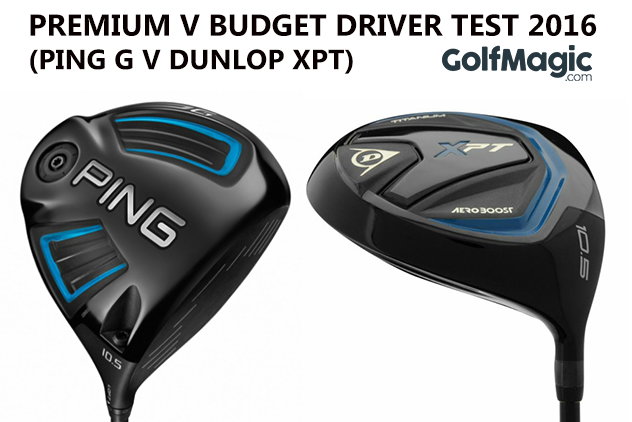
How does a £70 driver stack up against a £350 driver? That's what we set to find out.
Does the average golfer really need a top-of-the-range driver or are you just paying for the sponsorship deals and global advertising campaigns of the top brands, without really getting much more bang for your buck?
There’s no doubt modern technology installed in the driver today has reduced the penalty for inconsistencies in the swing, with maximum forgiveness on off-centre hits. Longer and more forgiving drives are promised but do they go hand-in-hand with wallet-busting prices?
VIDEO REVIEW: BEST DRIVERS TEST 2016
Many manufacturers aggressively pursue the top professional players, spending millions of pounds on sponsorship and also claiming to spend millions on Research & Development to get the edge, but does that edge really benefit the average player?
Plucking a top-of-the-range PING G driver (£350, stiff flex) - which won our 2016 Drivers Test - and pitching it against an off-the-rack Dunlop XPT Titanium (£70, only available in regular flex), we used a Foresight Sports GC2 monitor and Titleist Pro V1 balls to find out just how much difference a premium driver makes in comparison to a more affordable one.
While we could have chosen a driver for under £20, we decided to pick a club that could still perform to a decent level, providing a genuine option to players looking for a club with a decent level of performance, with a rock bottom price.

LOOKS
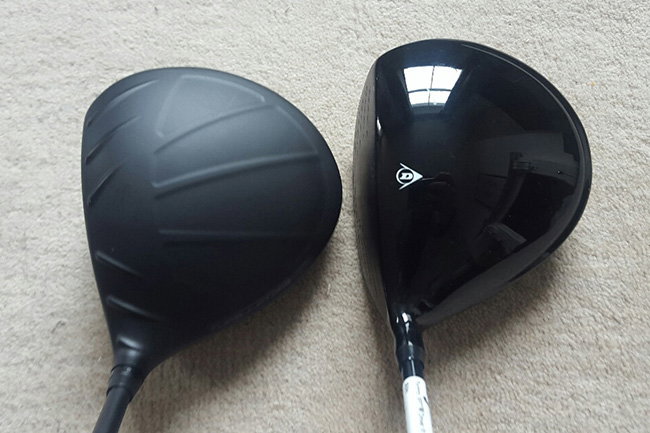
Purely objective, but often you know the cheaper clubs before spotting the brand name. This time around, however, the Dunlop would not look out of place in a lineup containing leading drivers on the market.
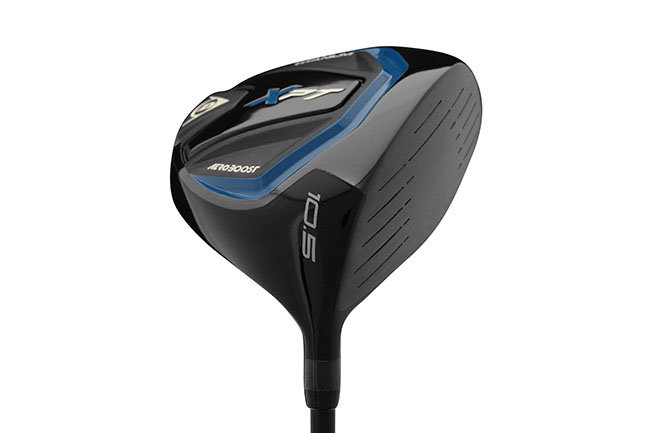
The Dunlop XPT's all-black colour palette contrasts appealingly with blue flashes on the sole, but we would prefer the face to be a colour other than black, in order to differentiate it better from the crown. The shape is traditional, and its 460cc head sits invitingly behind the ball, especially with the Dunlop logo aiding decent alignment.
Its finish is very much on the shiny side, which is not ideal standing over the ball, while its stock grip appears a tad tired in comparison to the PING.
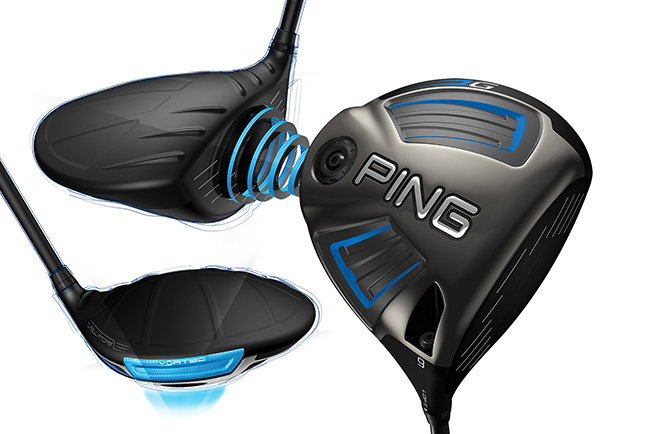
With the PING G you can just tell it's the premium offering of the two, especially with all its glitzy technology on show at first glance. PING's Turbulators and Dragon Fly Technology are instantly visible on the crown, and ensure good alignment over the ball. The turbulators also blend into the black matte finish as not to put off the player.
Like the Dunlop, there are flashes of blue on the sole, but the colour jumps out of the black background a lot more. There is more of a brushed silver finish on the face to provide a better contrast with the crown, and the head appears a little larger when sat behind the ball, despite also being 460cc.
Verdict
When looking at the two drivers side-by-side, the PING G is clearly the elite club, but the Dunlop XPT Titanium exudes no hint of being a budget driver. The glare over the ball was really the biggest issue. While the PING may turn heads for the right reasons when it comes to looks, the Dunlop would not do the same for the wrong reasons.
DISTANCE
Tested with a Foresight Sports GC2 launch monitor and using Titleist Pro V1 balls, we hit 20 shots with each 10.5-degree driver.
Well struck shots with the PING G were reaching 285 total yards on average, with the occasional boomer tipping the scales at 293 yards. Average carry distance reached 255 yards, while average ball speed was 155 mph.
VIDEO: PING G DRIVER REVIEW
The Dunlop gave us an average total distance of 265 yards, so some 20 yards shy of the PING - with the longest being 271 yards. The carry was more varied, but came out at 245 yards on average - so 10 yards shy. Like carry, average ball speed was up and down, but averaged 140 mph - a decrease of 15 mph.
Verdict
Clearly, the PING is offering the superior performance, with an average total distance gain of 20 yards. The total distance is also more consistent, as is the ball flight. It also generated effortless power, while we had to work a bit harder with the Dunlop. Nevertheless, the numbers we could still generate out the £70 Dunlop driver did surprise us somewhat.
FORGIVENESS
The PING G driver is one of the most forgiving big sticks on the market, offering assistance from all over the face. When we strayed from the centre, we were losing around 20 yards of total distance, leaving us with a total yardage of around 265 yards.
Dispersion was also incredibly impressive, thanks to its stiff ALTA 55 shaft, which gives superb feedback on where the driver head is throughout the swing.
VIDEO: PING G IRON REVIEW
The Dunlop XPT Titanium struggled in this category, as off-centre hits suffered dramatically, and we were losing around 40 yards on a couple of shots. Its stock regular shaft caused us issues as we didn’t always feel in control of the club, especially at the start of the downswing. This caused us to be early and late through the impact area on occasion.
More than anything, this proves playing with the correct shaft flex to match your swing is of huge importance, so if you can afford to splash out on a custom fitting, we recommend you do so - much of that depends on how seriously you take your golf, though.
Verdict
There is a vast difference in the amount of forgiveness on offer. The PING did not punish us too dramatically when we strayed away from the centre, while the Dunlop did not perform as well when we missed the sweet spot.
FEEL
Again of personal preference, but we enjoyed the feel of both clubs.
The PING G has a responsive, relatively hard feel. It stays fairly constant throughout the face, albeit diminishing slightly the farther you move from the sweet spot.
The Dunlop, on the other hand, has an amiable soft feel, although it does not offer as much feedback as the PING. Furthermore, when struck from the perimeter of the face, the feel turns slightly sour.
Verdict
Both clubs produce an appealing feel. The PING G offered more feedback, which made us feel in control of the ball off the face.
SOUND
The PING has a loud, bright sound, which will grab attention whether you're on the driving range or the course. The Dunlop is more muted and not quite as lively.
Verdict
While the PING is loud and lively, the Dunlop doesn't scream as much off the face. It all comes down to personal preference.
BALL FLIGHT
The PING G has a stable, mid-to-high ball flight, which we were able to manipulate fairly easily without changing any of the settings. With the flick of a wrench we were also able to change the loft setting, with performance staying at a high level when we did so.
The ball flight with the Dunlop was naturally high, and ballooned into an apex. We felt that distance was probably being lost because of this, and despite our best efforts we were not able to produce a more penetrating flight.
Verdict
The PING G has a more penetrating ball flight, and we were able to hit the ball much higher and lower easily. The driver also offers adjustability, which is simple to use. The Dunlop XPT Titanium has a very high ball flight, which we were unable to control. We felt we lost distance and control because of this.

CONCLUSION
There is a vast difference in performance between the PING G and Dunlop XPT Titanium.
In the distance and forgiveness stakes, the chasm is at its greatest, with the PING thoroughly outperforming the Dunlop. The PING G has a more penetrating ball flight, while the Dunlop is naturally very high, and the more expensive big stick also offers adjustability.
The PING has a firm feel, while the Dunlop has a soft feel. Both are appealing, although the PING offers more feedback. The sound of the PING is also loud and lively, while the Dunlop is more muted. We could not split them in this category, thought, as acoustics is very much of personal preference.
When it comes to appearance, the PING showcases its technology on the crown, aiding good alignment, and has a better contrast of colours on the crown and face, which the Dunlop lacks. Saying that, the head shape of the Dunlop does not look out of place alongside leading drivers.
Spending an extra £280 on the PING G buys a much better product, but the Dunlop XPT Titanium is still a decent club. The question remains whether you want or need the extra performance benefits that come with the PING G.
Head to the PING website for more information on the PING G driver, or go to Sports Direct to learn about the Dunlop XPT Titanium driver.


.jpg?height=270&format=webp&aspect_ratio=1:1)

_0.jpg?height=270&format=webp&aspect_ratio=1:1)


