Bryson DeChambeau U-turn deals final blow to LIV Golf as $300m rescue bid collapses
LIV Golf's hopes of a 2027 relaunch have been shattered after BC Partners pulled its proposed investment, with DeChambeau, Dustin Johnson, Cameron Smith and Joaquin Niemann refusing to sign up to the new project.

LIV Golf's future appears to be over after its proposed $300 million rescue deal collapsed, with Bryson DeChambeau and three other major names reportedly refusing to commit to the breakaway league's planned new era.
The Saudi-backed circuit had been hoping to secure fresh investment from BC Partners as part of a major restructuring ahead of the 2027 season.
But that proposal depended on LIV Golf securing sufficient contractual commitments from players to continue competing under its revamped model.
According to reports, that proved impossible.
Sports Business Journal's Josh Carpenter highlighted the scale of the problem, naming DeChambeau, Dustin Johnson, Cameron Smith and Joaquin Niemann among the latest high-profile players to decide not to sign up to LIV 2.0.
"None of the big names signed. Dustin Johnson, Cam Smith, Joaquin Niemann, Bryson DeChambeau," Carpenter posted on X.
On Wednesday, the Financial Times reported that BC Partners had abandoned its proposed investment, while The Athletic reported that LIV was now pivoting towards a wind-down.
The latest update represents a devastating setback for a league that has spent billions of dollars trying to establish itself as a permanent rival to the PGA Tour.
And DeChambeau's reported refusal to commit is particularly striking given what he was saying about LIV's future just days earlier.
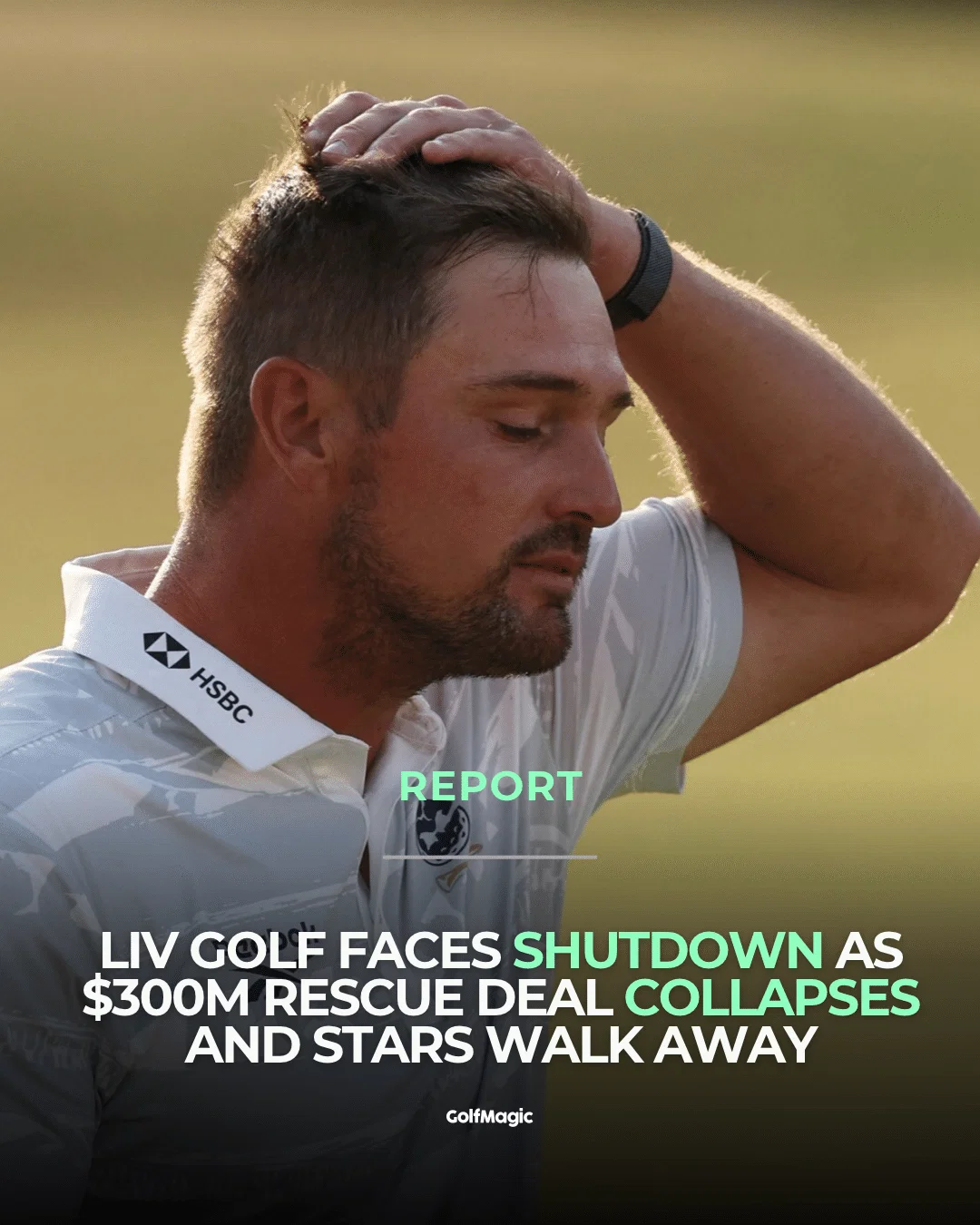
DeChambeau's LIV Golf comments come back to haunt him
The two-time major champion had appeared optimistic about LIV's proposed transformation during an interview with Indian entrepreneur Raj Shamani last week.
DeChambeau spoke enthusiastically about the prospect of a more sustainable team-based structure, suggesting that the new model could finally give players greater control over the league's direction.
He also revealed that his Crushers GC team had generated almost $29 million in revenue last year, with approximately $21 million in costs, including player payments and expenses.
That left around $8 million in earnings before interest, taxes, depreciation and amortisation.
The 33-year-old American argued that the teams themselves were performing well financially, but that the wider league's financial problems had created difficulties for the franchises.
He suggested a new structure could address those issues, with players taking on greater governance responsibilities rather than simply receiving enormous upfront payments.
"It's more the opposite. We're not really getting paid, but we do have the governance, you know, control," DeChambeau explained.
He also insisted the proposed league would be "done right", with proper management and a sustainable business model that could allow it to exist indefinitely.
Those comments now look particularly significant, since he has now decided not to sign up to LIV 2.0.
DeChambeau's apparent change of heart now all but kills LIV Golf's hopes of a new era.

LIV Golf's biggest names fail to sign up
DeChambeau was not the only superstar whose commitment LIV desperately needed this month.
Johnson, Smith and Niemann were also among the major names reportedly unwilling to sign the proposed new agreements.
Their decisions appear to have been central to the failure of the BC Partners investment, which was conditional on LIV retaining enough players to make its next chapter viable.

The league had already extended its deadline for player commitments, with the deadline reportedly moved on multiple occasions as officials attempted to secure enough signatures.
Despite those efforts, the necessary backing did not materialise.
Some players had indicated their willingness to continue, such as Richard Bland and Cameron Tringale, but the support of a handful of less prominent names was never going to compensate for the uncertainty surrounding the league's biggest attractions.
Without DeChambeau, Johnson, Smith and Niemann, and the likes of Jon Rahm, Tyrell Hatton and Sergio Garcia who had already ruled themselves last month, LIV would face an enormous challenge convincing broadcasters, sponsors and fans that its product could remain commercially attractive.

Billions spent, but LIV Golf's experiment is over
The collapse of the proposed rescue deal is the latest chapter in an increasingly troubled period for LIV Golf.
Saudi Arabia's Public Investment Fund (PIF) has poured more than $5 billion into the project since its launch, funding huge signing bonuses, lucrative prize funds and an ambitious international schedule.
But the financial backing was never going to last indefinitely.
The PIF has indicated that it will no longer fund LIV beyond 2026, leaving the league desperately searching for an alternative source of capital.
There had been signs of commercial progress, including new sponsorship agreements and the expansion of its tournament schedule into markets such as South Africa and Australia.
LIV also attracted sizeable crowds at several events and continued to insist that its business was developing.
However, those gains have not been enough to solve the fundamental problem: the league has struggled to build a sustainable business capable of supporting its enormous operating costs.
The departure of several prominent players has only made matters worse.

Jon Rahm's exit last month was followed by Tyrrell Hatton and Tom McKibbin, while Sergio Garcia, Ian Poulter and Graeme McDowell have also been among the high-profile names to move on.
The timing of the collapse is especially damaging given that former TaylorMade chief executive Mark King had recently been appointed as a senior adviser, with the intention of becoming chairman of LIV's advisory board.
His arrival appeared to signal that LIV was still serious about building a long-term future.
Instead, the proposed investment has fallen apart and the league is facing the prospect of winding down.

Bankruptcy hearing could spell the end for LIV Golf
LIV Golf's next bankruptcy hearing is scheduled for tomorrow, Thursday 5 November, when further details about the league's financial position and its future are expected to emerge.
The hearing could prove to be a defining moment, with the PIF expected to liquidate LIV Golf's remaining assets as the Saudi-backed project's future comes into even sharper focus.
If that happens, it would represent the final chapter in one of the most expensive and controversial experiments in professional golf history.
The league was supposed to be entering a new era, with fresh investment, a revised business model and greater player control.
Instead, its proposed relaunch has fallen apart, its biggest stars have failed to commit and its financial backer is reportedly preparing to sell off what remains.
After spending billions attempting to change professional golf, LIV has seemingly run out of road.

Andy Roberts first joined GolfMagic on a month's work experience back in April 2011.
Andy then assumed the role of GolfMagic Editor in 2015.


